
PV column
Photovoltaic
2026/03/19
World’s first standard for plug-in solar devices (BSW & VDE in Germany)
In Japan, the application is generally known as “plug-in solar” and “balcony solar,” unfortunately there is no specific standard in Japan.
The German Solar Association (BSW: Bundesverband Solarwirtschaft e.V.) published an article on Dec. 17, 2025, titled “DIN/VDE: world’s first standard for plug-in solar devices.”
In this column, we introduce this article by BSW and the related page from VDE (German Association of Electrical Engineers: Verband Deutscher Electrotechnischer e.V.)
**********
DIN/VDE: world’s first standard for plug-in solar devices
17.12.2025
The world’s first standard for plug-in solar devices (known as “balcony solar”) is now available. The publication of the DIN standard provides legal certainty for manufacturers, retailers, and end consumers and further promotes the product safety of plug-in solar devices.
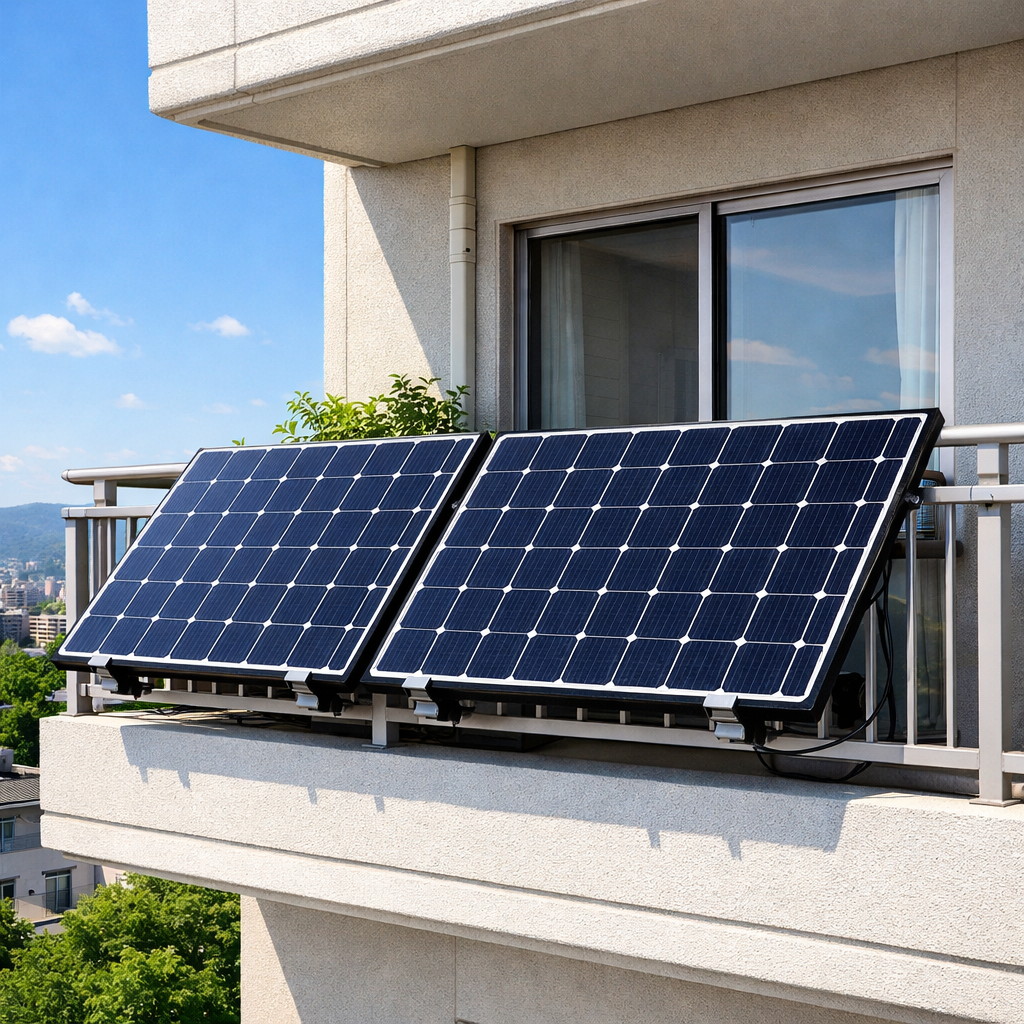
The new product standard DIN VDE V 0126-95 defines what a plug-in solar device is and what requirements must be met in order for solar modules to be connected to the home grid via Type F plugs (also known as “Schuko” and used for standard household appliances). Employees and members of the German Solar Industry Association (BSW-Solar) had been intensely involved in the development of this world’s first product standard for plug-in solar devices over several years.
Unlike photovoltaic systems, plug-in solar devices are designed such that they can be connected and used by non-professionals because of the output of the solar modules and the connected load of the inverter (AC power) being limited. This practically eliminates any risk to the existing electrical installation and to people in the household. The legal simplifications apply to plug-in solar devices typically consisting of one or two standard solar modules (each with a capacity of around 400 watts) with a total module capacity of up to 960 watts and an inverter with a maximum connected load of 800 watts.
For photovoltaic systems with a higher capacity, connection by a qualified electrician is still required to prevent overload or malfunctioning of the electrical installation. For module outputs of more than 2,000 watts, it is also mandatory to register with the grid operator.
Carsten Körnig, managing director of BSW-Solar, welcomes the new product standard: “The DIN standard for plug-in solar devices provides legal certainty for producers, retailers, and end consumers and strengthens a market segment that has been growing rapidly for several years. Plug-in solar devices are a great way for millions of tenants and apartment owners in multi-family homes to actively participate in the energy transition.”
A total of around 1.15 million plug-in solar devices with a cumulative output of around 1.14 gigawatts peak are already registered with the Federal Network Agency (BNetzA) in Germany.
Plug-in solar devices are also increasingly being used in combination with small storage systems. However, the recently published standard only covers stand-alone plug-in solar devices and does not apply to small storage systems. A product standard for plug-in batteries is therefore to be developed shortly by a DKE/VDE working group.
**********
Reference about VDE Standards
Plug-in solar devices for mains parallel operation
DIN VDE V 0126-95 VDE V 0126-95:2025-12
Short Report
This document describes basic safety requirements and tests for layman-operated, plug-in photovoltaic systems for grid-parallel operation (hereinafter: plug-in solar device), which are connected to end circuits within a low-voltage installation. This document also contains requirements to ensure mechanical safety. This document applies to single-phase plug-in solar devices with a rated voltage up to 250 V AC and for domestic and similar general purposes. The rated frequency is 50 Hz. Such a plug-in solar device consists of at least one each of a PV module, a grid-connected inverter, connecting leads, a plug-in device, and mechanical mounting hardware. This document applies to devices with a maximum apparent power of 600 VA. This document does not apply to “PV installations” in accordance with DIN VDE 0100-712.
You can purchase the report through the following page:
https://www.vde-verlag.de/standards/0100923/din-vde-v-0126-95-vde-v-0126-95-2025-12.html
**********
Acknowledgments: We would like to thank BSW and VDE in Germany for publishing the first standard of Plug-in solar.