
PV column
consulting
2026/11/01
Electrification in Numbers: How Can Energy Systems Change by 2035? (IRENA)
The International Renewable Energy Association (IRENA) published an article on September 24, 2026, titled “Electrification in Numbers: How Can Energy Systems Change by 2035?”
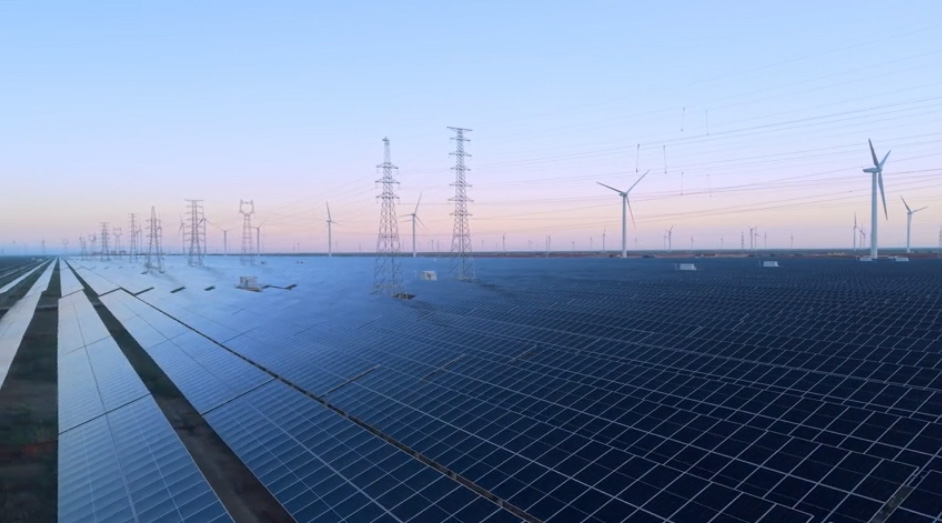
In this column, we will introduce an article on renewable energy.
**********
Electrification in Numbers: How Can Energy Systems Change by 2035?
1. Electricity Is Set to Become the Dominant Energy Carrier
While the global goals of tripling renewable power capacity and doubling energy efficiency improvements by 2030 remain essential, alone they are not sufficient to achieve the global energy transition.
With the rising energy demand, electrification with renewables will be central for end-use sectors such as buildings, transport, and industry.
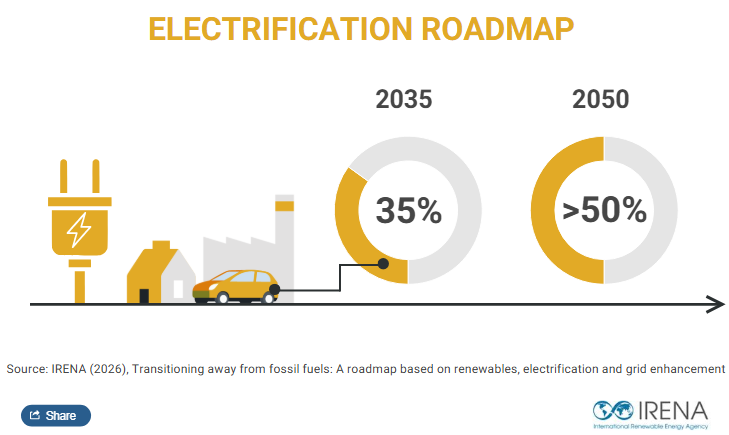
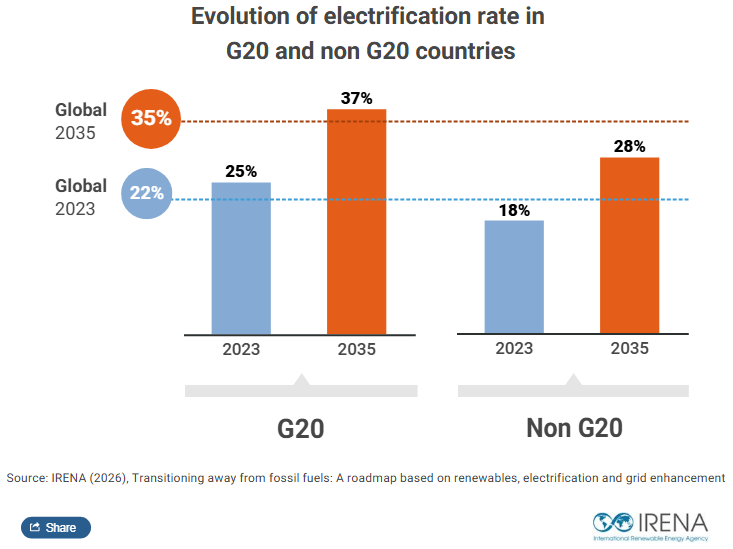
Today, electricity accounts for 23% of global final energy use. Under IRENA’s revised 1.5°C Scenario, it will rise to 35% by 2035 and above 50% by 2050.
2. Rising Energy Demand Must Be Met by Renewables
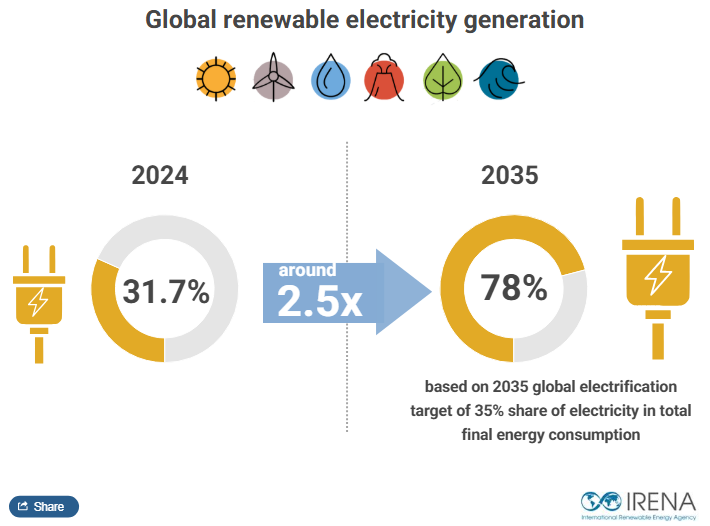
Overall, renewables accounted for 31.7% of the electricity generation globally in 2024, totalling 9 836 terawatt hours(TWh).
To achieve the 35% electrification target and ensure renewables meet most of the demand, their share in electricity generation must grow to around 78% by 2035, roughly 2.5 times today’s level.
3. Electrification with Renewables Is a No-Regret Option
Electrification is a reliable long-term solution across a wide range of scenarios.
Alongside efficiency, electrification could deliver about one-third of cumulative CO₂ emission reductions between 2026 and 2050.
It also strengthens energy security, boosts competitiveness and supports lower, more stable electricity prices.
4. Each Sector Electrifies at Its Own Pace
Electrification is currently highest in buildings, reaching 55% of their energy use by 2035 and over 75% by 2050, driven by heat pumps, electric cooking and cooling demand.
Industry follows at around 35% by 2035 and over 40% by 2050, as low- and medium-temperature heat is electrified and green hydrogen helps decarbonise hard-to-abate sub-sectors.
Transport starts at just 1% but grows the fastest, reaching 15% by 2035 and over 45% by 2050 as light vehicles and buses go electric.
5. Grids and Flexibility Must Scale Together
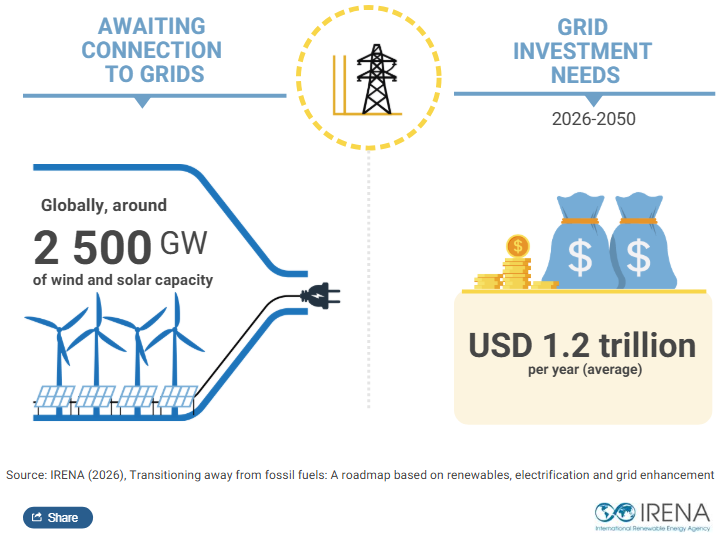
In many regions, grid infrastructure and flexibility have become a critical bottleneck. Around 2 500 GW of projects worldwide are awaiting grid connection.
To ensure reliable, secure and affordable electricity systems capable of supporting growing demand, countries must simultaneously invest in grids, storage and system flexibility.
The annual investment to enhance grids flexibility and strengthen infrastructure must more than double from USD 0.5 trillion in 2025, to around USD 1 trillion through 2035, and USD 1.2 trillion thereafter.
6. A Global Target and Co-ordinated Action Can Turn Ambition into Results
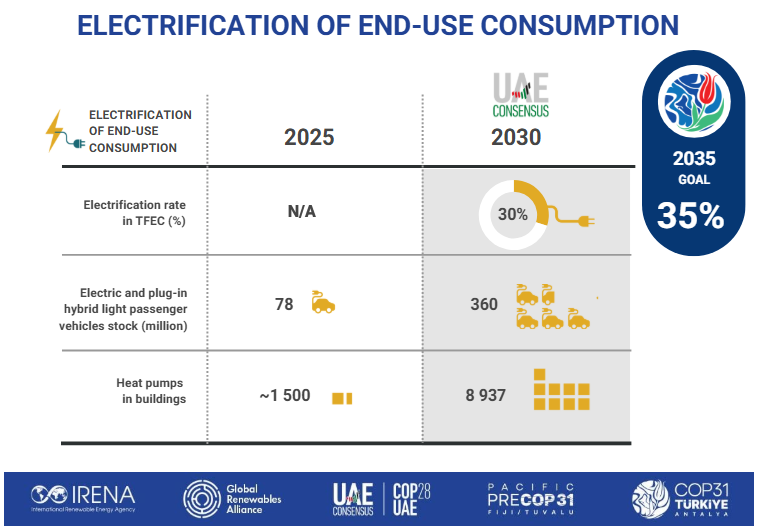
Drawing on IRENA’s roadmap, the incoming COP31 Presidency of Türkiye has announced a global electrification target of 35% of final energy demand by 2035 as part of its Action Agenda.
Countries start from different points based on their energy demand, electricity access, infrastructure and investment capacity, and will need to determine nationally appropriate pathways to meet the electrification target. Realising this shift depends on a wide range of forward-looking and co-ordinated policies.
Find out more on: https://www.irena.org/Electrification
Explore more on this topic
Browse these Related publications:
- Delivering on the UAE Consensus: Tracking progress toward tripling renewable energy capacity and doubling energy efficiency by 2030
- Transitioning away from fossil fuels: A roadmap based on renewables, electrification and grid enhancement
Acknowledgments: We would like to thank IRENA for publishing this interesting report.